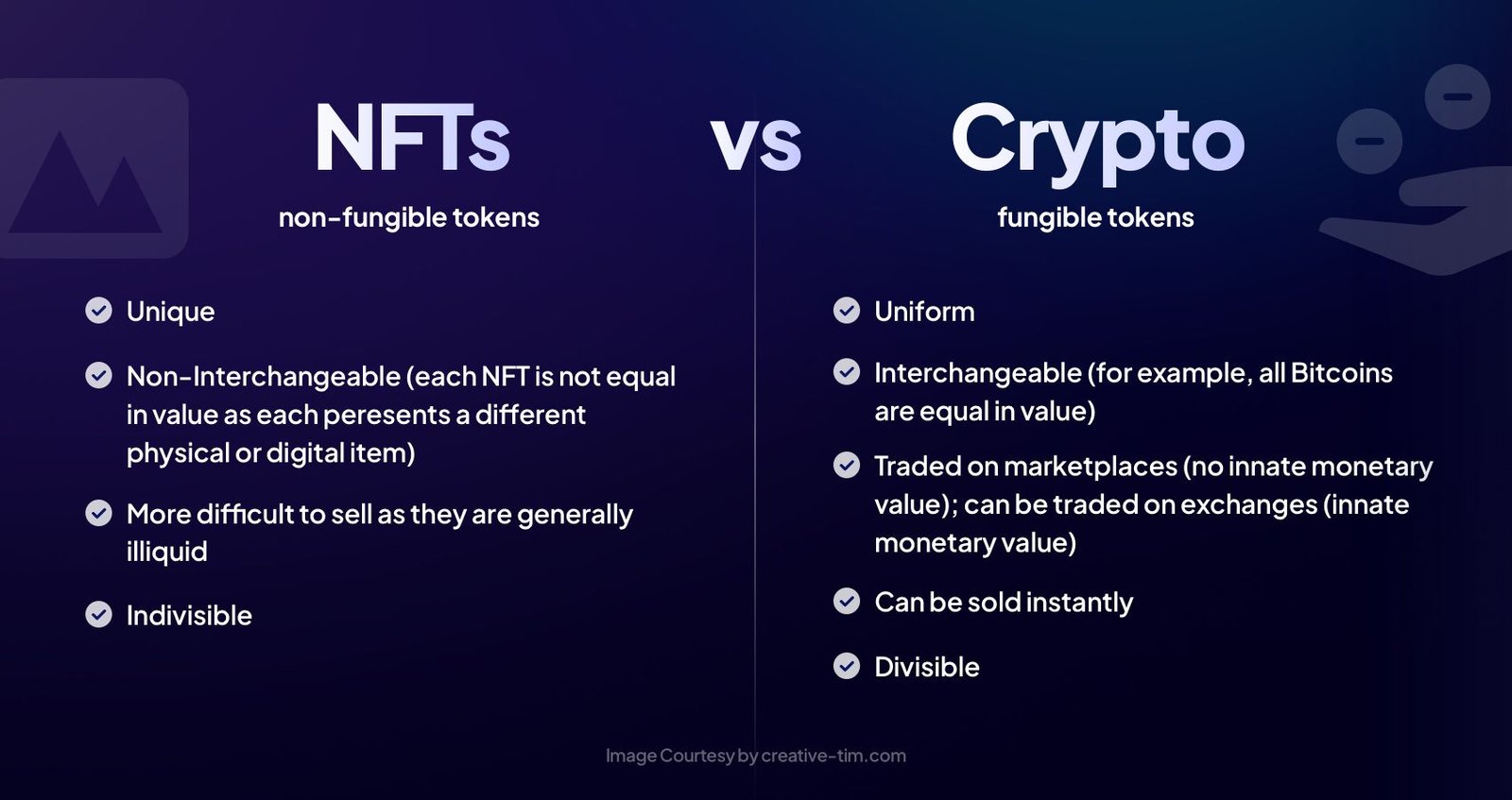
The world of digital assets is booming, and two terms that frequently come up in discussions are NFTs and cryptocurrencies. For many newcomers, distinguishing between them can be confusing. This article dives deep into the NFT vs Cryptocurrency Difference, exploring how these digital assets work, their purposes, and why they have become pivotal in the digital economy.
What Are Cryptocurrencies?
Cryptocurrencies are digital or virtual currencies that use cryptography for security. Unlike traditional money issued by governments, cryptocurrencies operate on decentralized networks based on blockchain technology. Blockchain ensures that every transaction is secure, transparent, and immutable.
Popular examples of cryptocurrencies include:
- Bitcoin (BTC) – The first cryptocurrency that revolutionized digital finance.
- Ethereum (ETH) – Known for its smart contract capabilities.
- Binance Coin (BNB) – A widely used token for transactions on the Binance platform.
Cryptocurrencies primarily function as:
- Mediums of Exchange – Digital money for buying goods and services.
- Stores of Value – Like digital gold, especially in volatile economic climates.
- Investment Assets – Traders and investors buy cryptocurrencies hoping for price appreciation.
What Are NFTs?
NFTs, or Non-Fungible Tokens, are unique digital assets that represent ownership of a specific item or piece of content, often on the blockchain. Unlike cryptocurrencies, NFTs are non-fungible, meaning no two NFTs are identical.
NFTs can represent:
- Digital art
- Music and audio files
- Virtual real estate
- Collectibles
- In-game items
The uniqueness of NFTs makes them particularly valuable in the digital space. Their ownership and provenance are verifiable on the blockchain, ensuring authenticity and scarcity.
NFT vs Cryptocurrency Difference: Key Points
Understanding the NFT vs Cryptocurrency Difference requires looking at several critical aspects:
1. Fungibility
- Cryptocurrency: Fungible. One Bitcoin is equal to another Bitcoin, and they can be exchanged or divided.
- NFT: Non-fungible. Each NFT is unique and cannot be exchanged on a one-to-one basis with another NFT.
2. Purpose
- Cryptocurrency: Primarily used as money or investment assets.
- NFT: Represents ownership of unique digital items and collectibles.
3. Value Determination
- Cryptocurrency: Value is often based on market demand, adoption, and utility.
- NFT: Value is highly subjective, depending on rarity, creator reputation, and demand for the digital item.
4. Market Behavior
- Cryptocurrency: Highly liquid, often traded on exchanges with large volumes.
- NFT: Marketplaces are specialized, and liquidity can vary; some NFTs sell instantly, while others remain unsold for long periods.
5. Technology
Both NFTs and cryptocurrencies rely on blockchain technology, but the implementation differs:
- Cryptocurrencies focus on secure transactions and decentralized finance.
- NFTs focus on verifying ownership and uniqueness of digital assets.
How NFTs and Cryptocurrencies Intersect
Despite their differences, NFTs and cryptocurrencies are connected:
- Blockchain Backbone: Both use blockchain for security and transparency.
- Payment Methods: Most NFTs are purchased using cryptocurrencies like Ethereum.
- Digital Economy Role: Both contribute to the growing ecosystem of decentralized finance and digital assets.
Benefits of Cryptocurrencies
- Decentralization: No central authority controls cryptocurrency networks.
- Transparency: Every transaction is recorded on the blockchain.
- Global Accessibility: Anyone with an internet connection can participate.
- Investment Opportunities: High volatility can offer significant gains.
Benefits of NFTs
- Ownership Proof: Blockchain confirms authenticity and ownership.
- Creator Empowerment: Artists can monetize their digital creations directly.
- Digital Collectibles: NFTs allow ownership of unique digital items.
- Programmable Assets: NFTs can have embedded royalties, giving creators long-term earnings.
Risks and Challenges
Understanding the NFT vs Cryptocurrency Difference also involves examining potential risks.
Cryptocurrencies
- High volatility leading to price swings
- Regulatory uncertainty in many countries
- Risk of hacking and scams
NFTs
- Market illiquidity – Not all NFTs can be sold easily
- Subjective valuation – Prices may fluctuate dramatically
- Environmental concerns – Some NFT platforms use energy-intensive blockchains
NFT vs Cryptocurrency: Investment Perspective
- Cryptocurrency Investment: Typically involves buying coins or tokens with the expectation that their value will appreciate. Investors often use wallets, exchanges, and DeFi platforms.
- NFT Investment: Focuses on digital ownership. Investors buy NFTs for their uniqueness, artistic value, or potential resale profit.
Practical Examples
- Cryptocurrency Use Case: Paying for goods on an e-commerce platform using Bitcoin or using Ethereum to power decentralized applications.
- NFT Use Case: Buying a unique digital artwork or a rare in-game item, with ownership verified via blockchain.
NFT vs Cryptocurrency in Popular Culture
NFTs have surged in the art, music, and gaming industries. High-profile sales, such as digital art auctions fetching millions, have attracted mainstream attention. Cryptocurrencies, on the other hand, have become part of global finance, with companies accepting Bitcoin payments and investors diversifying portfolios.
How to Get Started
For Cryptocurrencies
- Choose a Reliable Exchange: Binance, Coinbase, or Kraken are popular options.
- Secure a Wallet: Hardware wallets or software wallets protect your assets.
- Understand the Market: Study market trends, price charts, and news.
For NFTs
- Select an NFT Marketplace: OpenSea, Rarible, or Magic Eden are top platforms.
- Set Up a Crypto Wallet: Typically Ethereum-based wallets like MetaMask.
- Research Creators and Collections: Look for reputation, rarity, and potential value.
Future Outlook
The NFT vs Cryptocurrency Difference will continue to evolve:
- Cryptocurrencies may become more integrated into traditional finance and payment systems.
- NFTs will likely expand into more practical use cases such as digital identity, licensing, and virtual real estate.
- Both markets will face regulation, which may affect adoption and growth.
NFT vs Cryptocurrency Difference: Key Takeaways
- Cryptocurrencies are fungible; NFTs are unique.
- Cryptocurrencies are primarily for exchange and investment; NFTs represent ownership of digital assets.
- Both rely on blockchain technology but serve different purposes.
- The value of cryptocurrencies is market-driven, whereas NFTs’ value is subjective and creative-driven.
- Both offer investment opportunities but come with unique risks.
Conclusion
Understanding the NFT vs Cryptocurrency Difference is essential for anyone looking to navigate the digital asset world. While both are rooted in blockchain technology, their purposes, value, and market behaviors differ significantly. Whether you are an investor, creator, or digital enthusiast, knowing these differences can help you make informed decisions in the rapidly evolving digital economy.
By keeping up with trends, studying market behaviors, and understanding the underlying technology, you can leverage both NFTs and cryptocurrencies to participate effectively in the digital revolution.